US spot Bitcoin exchange-traded funds (ETFs) saw outflows of $4.06 billion in June, marking their worst monthly performance since launch and surpassing the previous record of $3.56 billion set in February 2025.
These fund outflows pushed the products into overall net losses for 2026 for the first time, though they ultimately posted inflows of $221 million on Thursday.
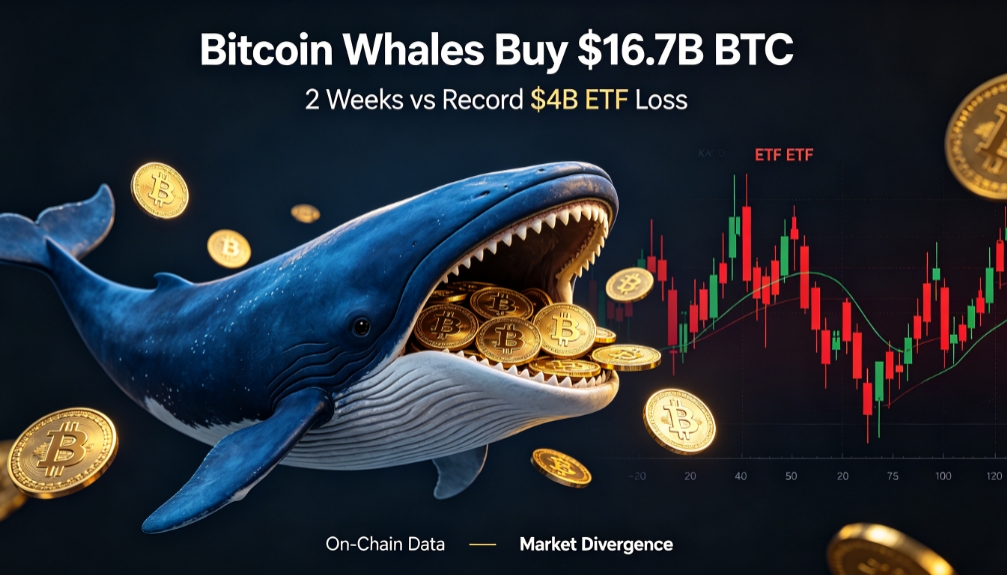
Analysts at cryptocurrency exchange Bitfinex told CoinDesk on Friday that large wallet holders, commonly referred to as "whales," took the opposite stance. They accumulated more than 270,000 BTC over a two-week window, while spot premiums — a gauge of aggressive bidding from US buyers — remained negative, indicating the buying activity did not stem from spot trading desks.
The simultaneous pattern of institutional selling and accumulation by long-term large holders has emerged near cycle lows in previous market cycles, as long-term holders scoop up coins from sellers ahead of price rebounds.
Solana stood out as an exception among major digital assets. Since early June, SOL has climbed roughly 15% even as Bitcoin hit a 21-month low. The rally was fueled by protocol upgrades and a 120% surge in on-chain transfers of tokenized real-world assets, which reached $8.53 billion in volume.
Bitfinex analysts described this market divergence as "familiar," noting Bitcoin typically sells off first yet recovers ahead of other assets.
Not all altcoins followed this trajectory, however. Optimism and other Layer 2 tokens — networks built to ease congestion on Ethereum — traded close to all-time lows after Coinbase’s Base chain abandoned shared Optimism technology, dismantling the fee-capture narrative that underpinned their value proposition.
Upcoming inflation data will act as a critical turning point. May inflation clocked in at 4.2%, but remarks from officials at the ECB Sintra Forum signaling eased inflation risks have already delivered a mild boost to risk assets. Cooler inflation prints will reverse the rate-hike narrative that weighed heavily on Bitcoin all month, setting the stage for the Federal Reserve’s next policy meeting.