Tobias Adrian, Director of the IMF’s Monetary and Capital Markets Department, wrote in a blog post: “Frictions disappear — but so do buffers.”
Tokenization represents financial assets such as stocks, bonds and bank deposits on shared digital ledgers. Smart contracts execute trades, transfer ownership and process payments far faster than traditional finance (TradFi), where such processes can take days.
In traditional finance, trades go through execution, clearing, settlement and reconciliation, with separate institutions handling each stage. Sellers may wait two days or longer to receive proceeds, while buyers cannot take possession of their shares. For tokenized assets, the entire process takes just seconds.
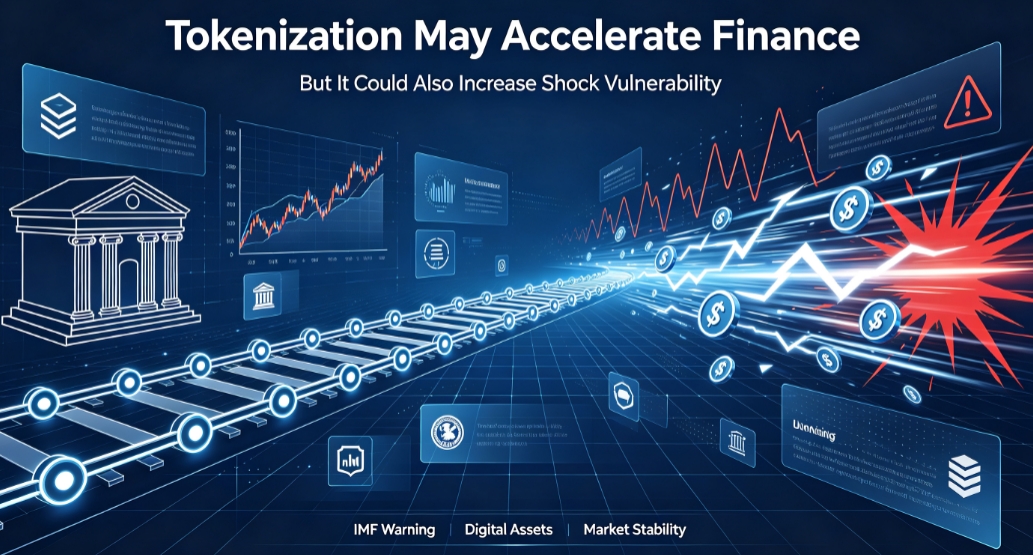
“When tokenized assets change hands, smart contracts can simultaneously execute trades, transfer ownership and move payments — all on a shared ledger. Processes that once took days to clear and reconcile are now completed within minutes,” Adrian said.
There are additional benefits. Tokenization enables different forms of digital money, including tokenized bank deposits, fiat-backed stablecoins and tokenized central bank reserves, to function seamlessly as settlement assets on the same ledger.
It also allows high-quality assets to be rapidly deployed as collateral across platforms.
Yet this transformation is not without risks.
Adrian explained that the delays eliminated by tokenization are not merely inefficiencies. They also grant banks, regulators and risk managers time to spot troubles before they spiral out of control.
Once these buffers are removed, market shocks, coding bugs or waves of automated sell-offs can race through the entire system before any intervention is possible.
“Liquidity demands emerge in real time, collateral calls can be automated, and failures may propagate faster than institutions or regulators can respond,” he wrote. “Risks once dispersed across layers of intermediaries are increasingly concentrated in the platforms and code governing these transactions.”