In the third quarter of 2026, the global artificial intelligence industry is undergoing a profound paradigm shift. If 2023 to 2025 was the "infrastructure era" of computing power arms races and large model pre-training, then entering the second half of 2026, the industry's focus has indisputably shifted to the commercial deployment of the AI application layer. With the exponential decline in large model inference costs and the full maturation of multimodal large model capabilities, AI Agents are crossing the chasm from "passive tools" to "autonomous decision-makers" at an unprecedented speed. Against this macro backdrop, the financial sector, especially the highly digitized DeFi (Decentralized Finance) and crypto lending tracks, is becoming the "testing ground" and "harvesting field" for AI Agents to achieve large-scale deployment fastest.
1. AI Industry Trend: Underlying Logic Reconstruction from "Brute Computing Power" to "Precise Value Generation"
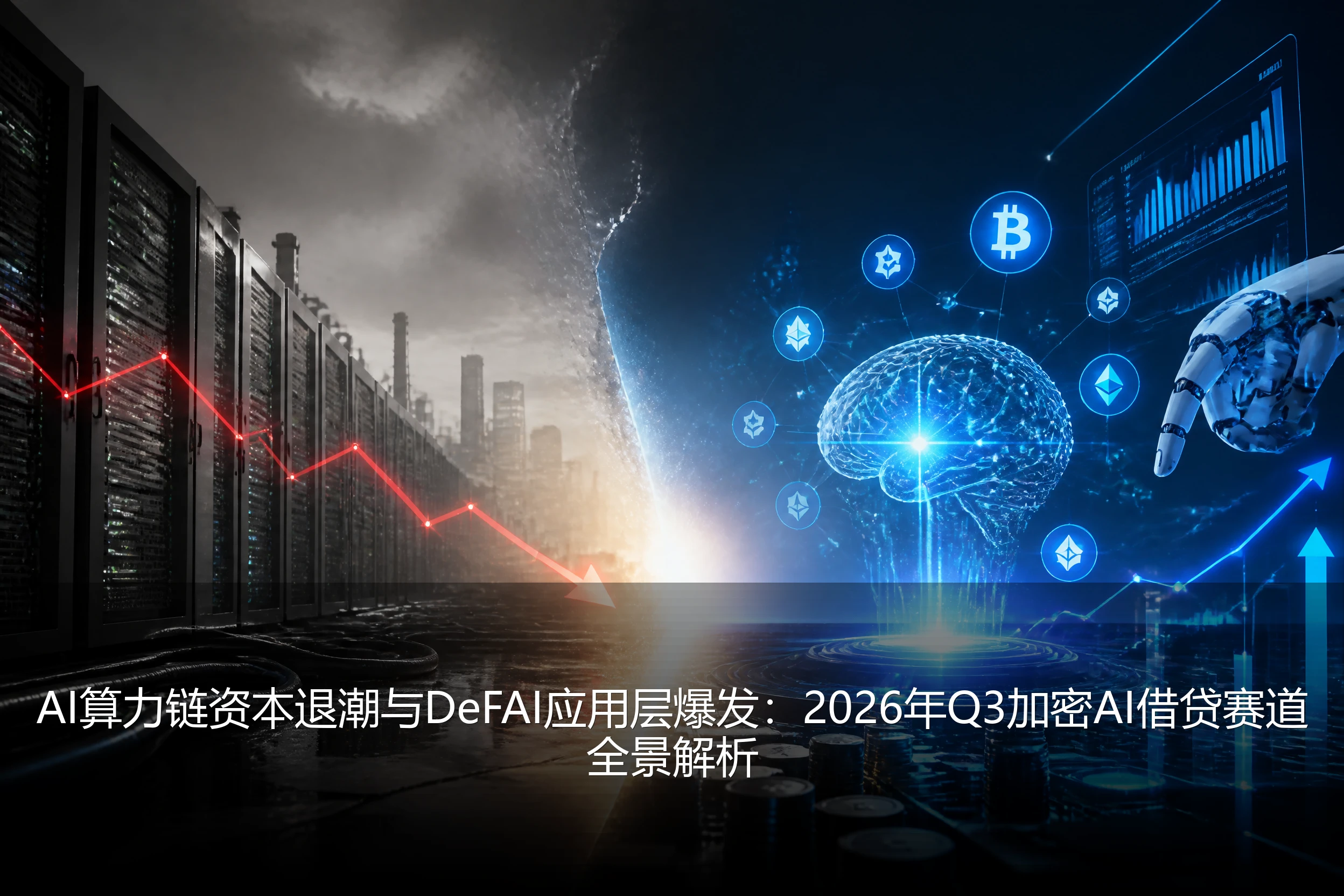
Reviewing the AI industry cycle over the past three years, the flow of capital clearly outlines the path of technological evolution. In the early stages, the market's thirst for computing power spawned market cap myths for chip giants like Nvidia, with computing power leasing and IDC construction becoming the most direct investment mainlines. However, as global major cloud service providers' capital expenditures showed peaking signals in mid-2026, the market gradually realized that simple computing power stacking could not directly translate into sustainable commercial returns.
Currently, the industry trend has pointed to "precise value generation"—namely, how to utilize existing computing infrastructure to achieve real cash flow through application layer innovation. The core driving force of this shift lies in the maturation of AI Agent technology. Unlike traditional conversational AI, AI Agents possess capabilities for goal decomposition, tool invocation, self-reflection, and continuous iteration. In enterprise applications, this means AI can independently handle a complete business closed-loop from data collection and analysis to executing decisions.
Among numerous application scenarios, the financial industry, with its high degree of datafication, clear rules, and high-frequency trading characteristics, has become the natural best deployment scenario for AI Agents. Traditional finance, limited by compliance barriers and legacy system architectures, requires long renovation cycles for AI penetration; whereas the DeFi sector, relying on open-source, permissionlessness, and composability, provides plug-and-play fertile soil for AI Agent deployment. Thus, the DeFAI (Decentralized Finance Artificial Intelligence) track has officially reached an inflection point from proof of concept to value reassessment.
2. AI Agents Reshaping Crypto Lending: The Automated Leap of Autonomous Risk Control and Yield Strategies
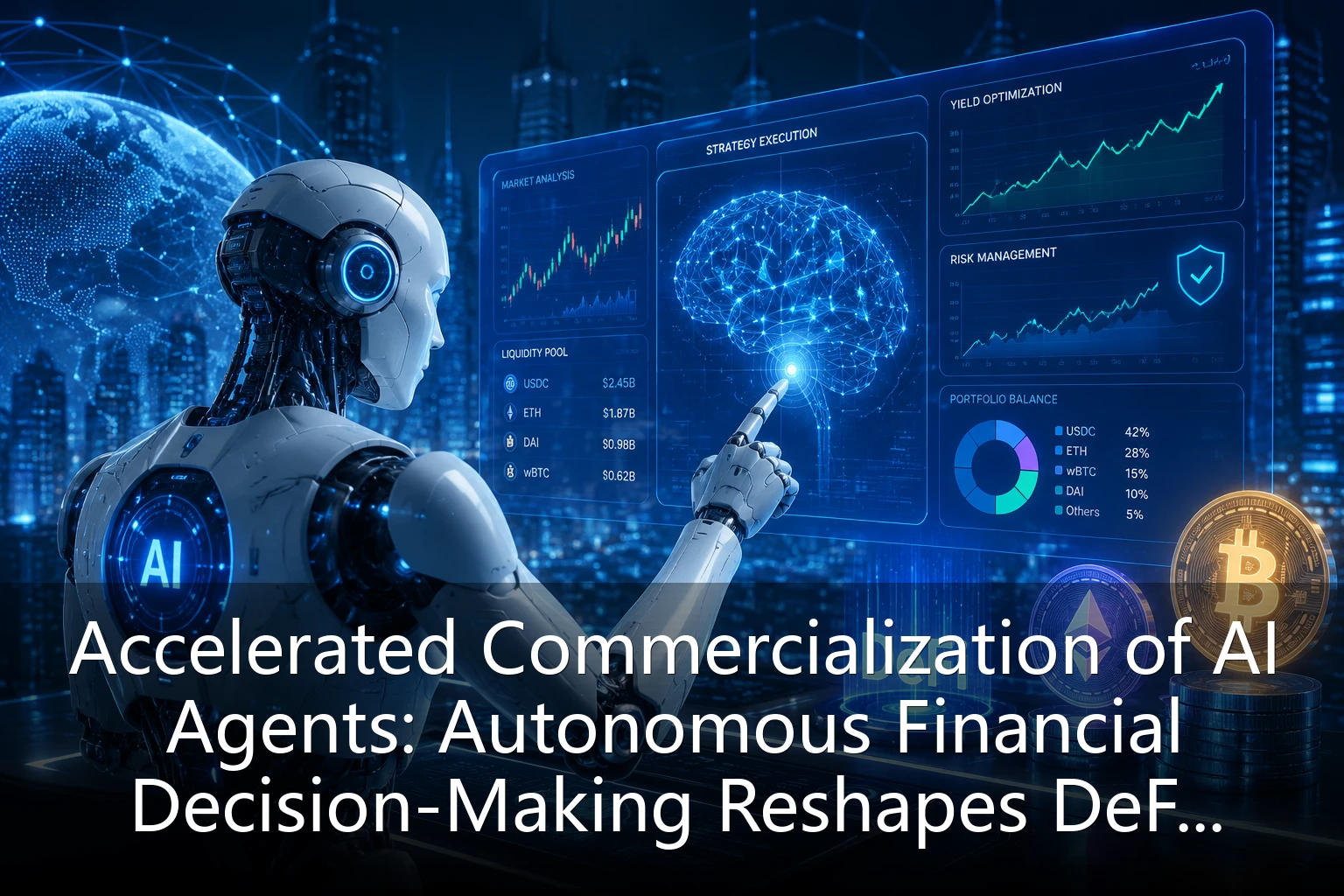
In the core DeFi track of crypto lending, the introduction of AI Agents is disrupting traditional protocol design and interaction methods. Previously, users performing lending operations on-chain needed to manually assess collateral ratios, monitor liquidation risks, and find optimal yield pools, which was not only energy-consuming but also highly susceptible to irrational losses due to market volatility. Today, large model-based AI Agents are automating these complex decisions.
1. On-Chain Upgrade of Smart Risk Control Models
Traditional DeFi lending protocols rely on static over-collateralization mechanisms to hedge against default risks, a mechanism with extremely low capital efficiency. The intervention of AI Agents makes dynamic risk control possible. By capturing on-chain data, social media sentiment indicators, and macroeconomic data in real time, AI risk control models can dynamically adjust users' collateral ratio requirements and liquidation thresholds. For instance, when an AI Agent predicts that a certain long-tail asset is about to face severe volatility, it can trigger margin call instructions or automatically close positions in advance, thereby minimizing bad debt rates. This "predictive risk control" not only enhances protocol security but also significantly improves capital turnover efficiency.
2. Automated Optimization and Execution of Yield Strategies
In terms of yield strategies, AI Agents are reshaping the gameplay of "Yield Farming." Traditional yield aggregators can only allocate funds according to preset smart contract logic, often appearing sluggish in the face of the rapidly changing DeFi market. AI Agents equipped with reinforcement learning capabilities can scan hundreds of liquidity pools across the entire network in real time, evaluate annualized yields, impermanent loss risks, and Gas fees, and complete cross-chain fund transfers and re-staking within milliseconds.
More notably, AI Agents can customize exclusive crypto lending strategies based on users' personal risk preferences. For example, for conservative users, the Agent automatically selects blue-chip assets as collateral to arbitrage between low-risk protocols; for aggressive users, the Agent utilizes leveraged loop lending to capture excess returns in highly volatile markets. This highly personalized smart financial service marks the evolution of crypto lending from "mass standardization" to "tailored" intelligence.
3. Industry Observations on the Deep Integration of AI and DeFi: Coexistence of Opportunities and Challenges
The explosive growth of AI financial agents not only brings out-of-circle traffic to DeFi but also triggers deep industry reflections. From a macro industry trend perspective, the combination of AI and Web3 is spawning a brand new "intent-driven" interaction paradigm. Users no longer need to understand complex smart contract codes or cumbersome operation interfaces; they only need to issue natural language instructions to the AI Agent, such as "Maximize the annualized yield of my idle ETH under controllable risks," and the Agent will automatically decompose the intent and execute it on-chain. This will greatly lower the user barrier for crypto lending, attracting hundreds of millions of traditional internet users into the Web3 world.
However, this technological change is also accompanied by challenges that cannot be ignored. First is the new dimension of smart contract security. As an external caller, the black-box nature of an AI Agent's decision-making could become the attack surface for protocol vulnerabilities. If the AI is maliciously induced to issue incorrect instructions, it could lead to protocol funds being drained. Therefore, the industry urgently needs to establish a set of security sandboxes and behavioral audit standards for AI Agent interactions.
Second is the uncertainty at the regulatory level. When an AI Agent makes crypto lending decisions on behalf of a user, once systemic losses occur, the issue of liability attribution becomes exceptionally complex. Is it the protocol party that bears the responsibility for risk control failure, the AI model provider for decision errors, or the user for bearing the authorization risk? These legal blanks require the industry to engage in active dialogue with regulatory bodies while advancing rapidly.
4. Investment Logic Reconstruction: DeFAI Value Capture Paths in the Post-Computing Power Era
Facing the profound shift in AI industry trends, the investment logic of the capital market is undergoing reconstruction. In the past two years, the market chased "shovel stocks" with physical computing power assets; now, funds are accelerating their migration to the DeFAI application layer capable of achieving a "data-model-application" closed-loop. For investors, grasping the dividend of this wave of crypto AI lending tracks requires focusing on the following core dimensions:
- Binding Depth of Models and Scenarios: Application layer projects relying solely on general large model API interfaces have low barriers and are easily replaced. The real investment value lies in protocols that possess proprietary data for specific financial scenarios and can fine-tune and optimize vertical risk control models. Such protocols can form a "data flywheel"—as user interactions increase, AI decision accuracy improves, attracting more users and forming a moat.
- On-Chain Transaction Throughput and Gas Cost Optimization: AI Agents executing strategies on-chain at high frequencies are extremely sensitive to the underlying public network's TPS and fees. Layer2 networks and related infrastructures that can effectively reduce the friction costs of AI execution will directly benefit from the explosion of Agent activities.
- Compliance and RWA Integration Capabilities: The scale of purely on-chain crypto assets is limited, and the ultimate form of AI lending will inevitably point to Real World Assets (RWA). Protocols capable of transforming off-chain physical asset credit data into on-chain credit scores through AI models will unlock the trillion-level traditional credit market, presenting massive valuation imagination space.
Overall, the AI industry trend in the second half of 2026 has clearly pointed to the deep development of the application layer. In this intelligence-driven financial transformation, the DeFAI track is no longer a vague narrative but a practical field generating real returns. From the ebb of computing power to the dance of finance, the deep integration of crypto lending and AI is injecting the most solid value foundation for the next bull market. For astute investors, now is the perfect time to jump out of traditional computing power thinking, re-examine, and lay out core assets in the AI application layer.